Pitch Sort
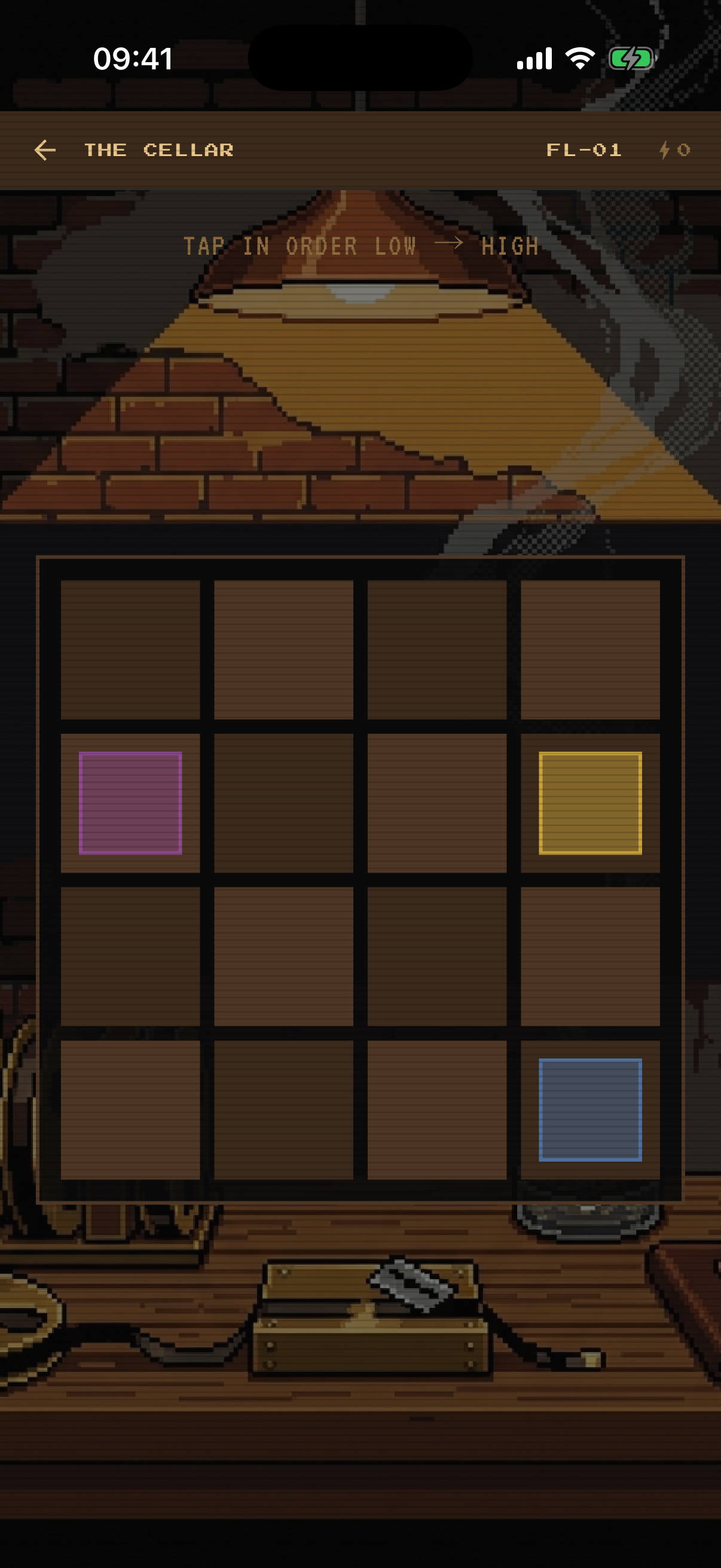
Tap cells in pitch order, lowest to highest. Tokens look identical; pitch information leaks only through audio. Sounds simple. It isn't.
Product 02 / Earshot
An ear-training puzzle game disguised as a heist adventure. Thirteen districts, thirteen suspects, three puzzle modes. The game teaches itself by being honest about what you got wrong.
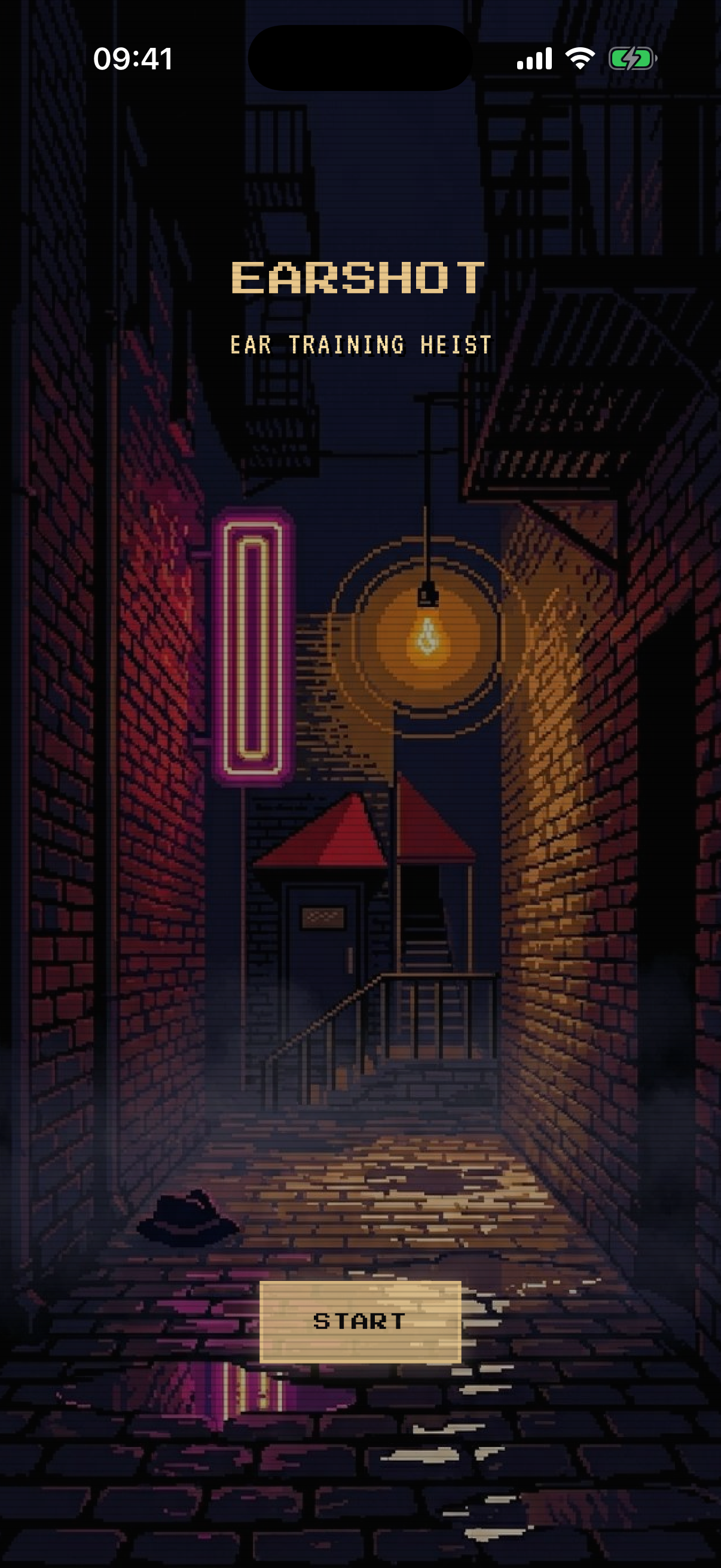
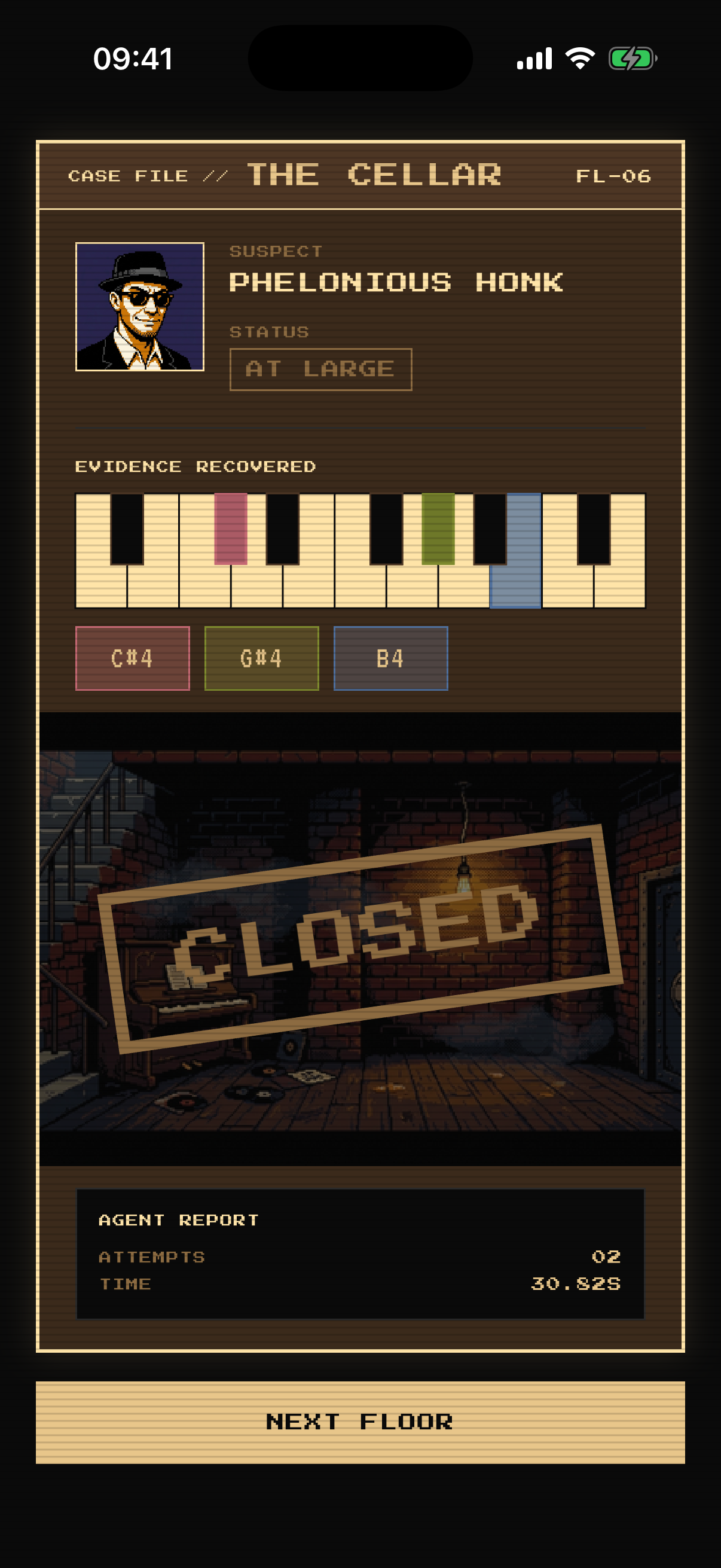
You play a detective working thirteen cases across a city of musical conmen. Each case is a puzzle box: a chord, a melody, a fragment you have to identify by ear. Solve it and you close the file. Miss it and the suspect stays at large.
Earshot is an ear-training game that doesn’t lecture you about ear training. Every puzzle tests a real listening skill, but the framing, pacing, and feedback are designed as a game first. There is no tutorial, and no daily login bribe. You play when you want to play, the game teaches itself by being honest about what you got wrong, and your progress lives on your device.
Each district mixes the three modes with its own per-district weighting, so the mode you encounter at floor 4 isn’t always the one you saw at floor 3. The skill focus shifts with it: diatonic shapes early, bass intervals mid-game, cluster discrimination at the top.
Tap cells in pitch order, lowest to highest. Tokens look identical; pitch information leaks only through audio. Sounds simple. It isn't.
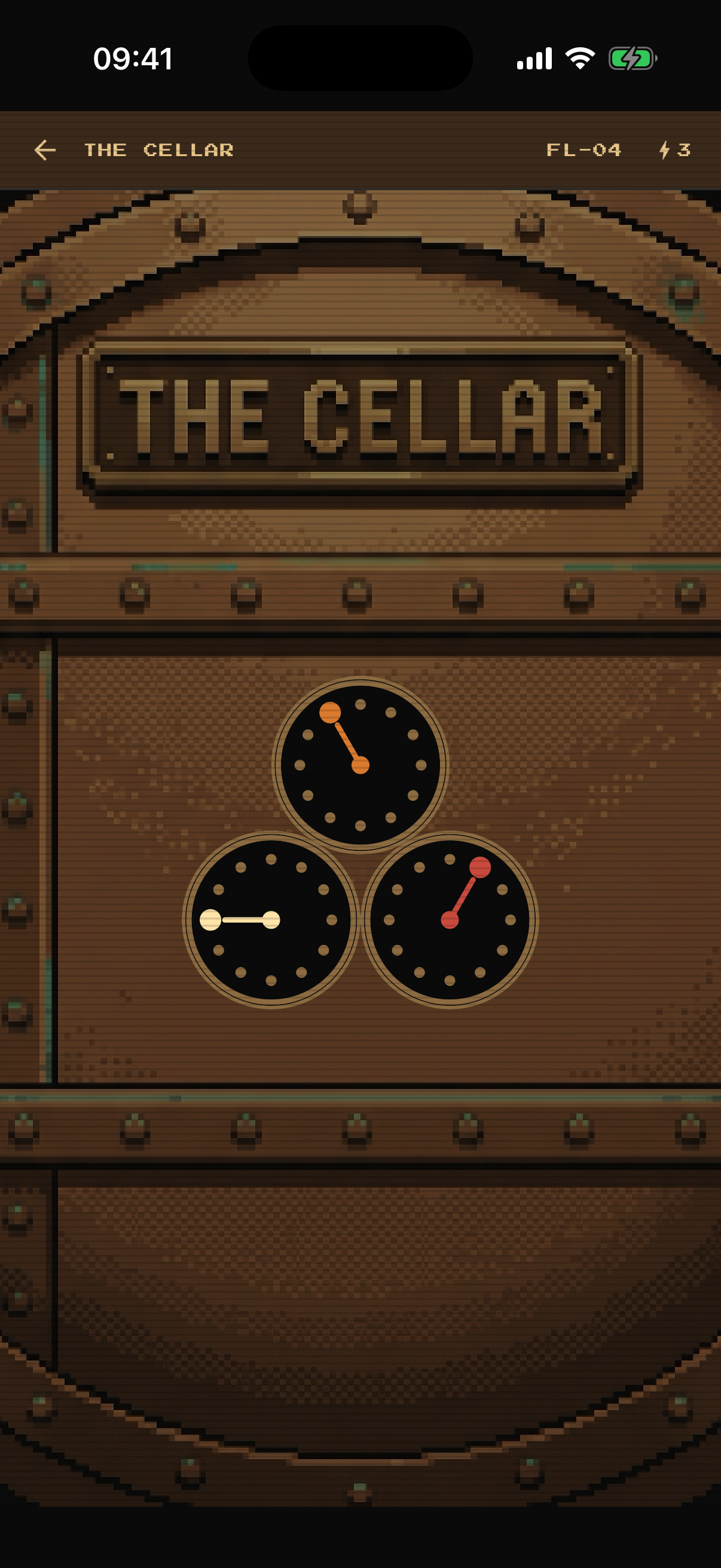
Spin dials until each one matches the note you heard. The dials don't tell you when you're right. Submit when you think it's locked.
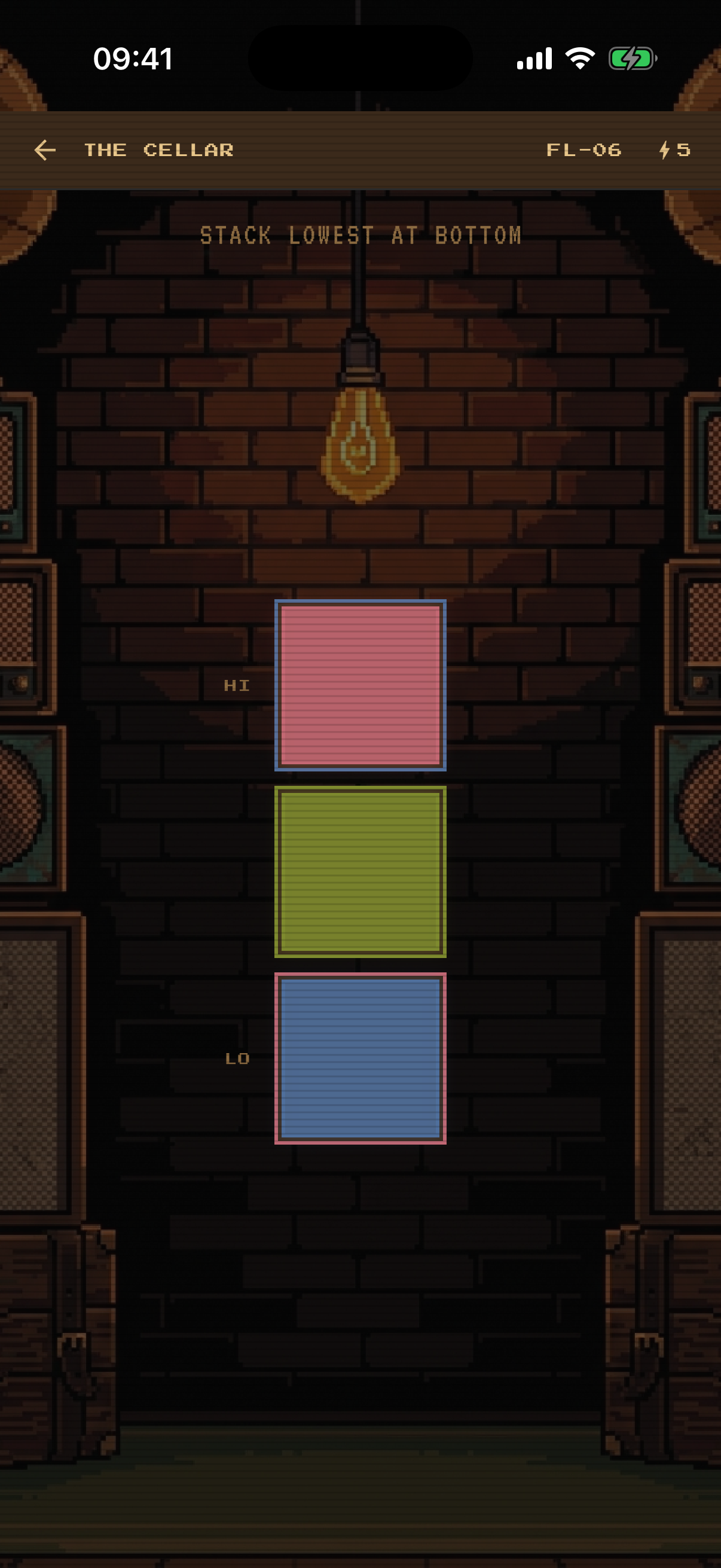
Drag tokens between slots until the stack is in ascending order. Audition tokens by tapping. Decide what's higher; the slots stay quiet.
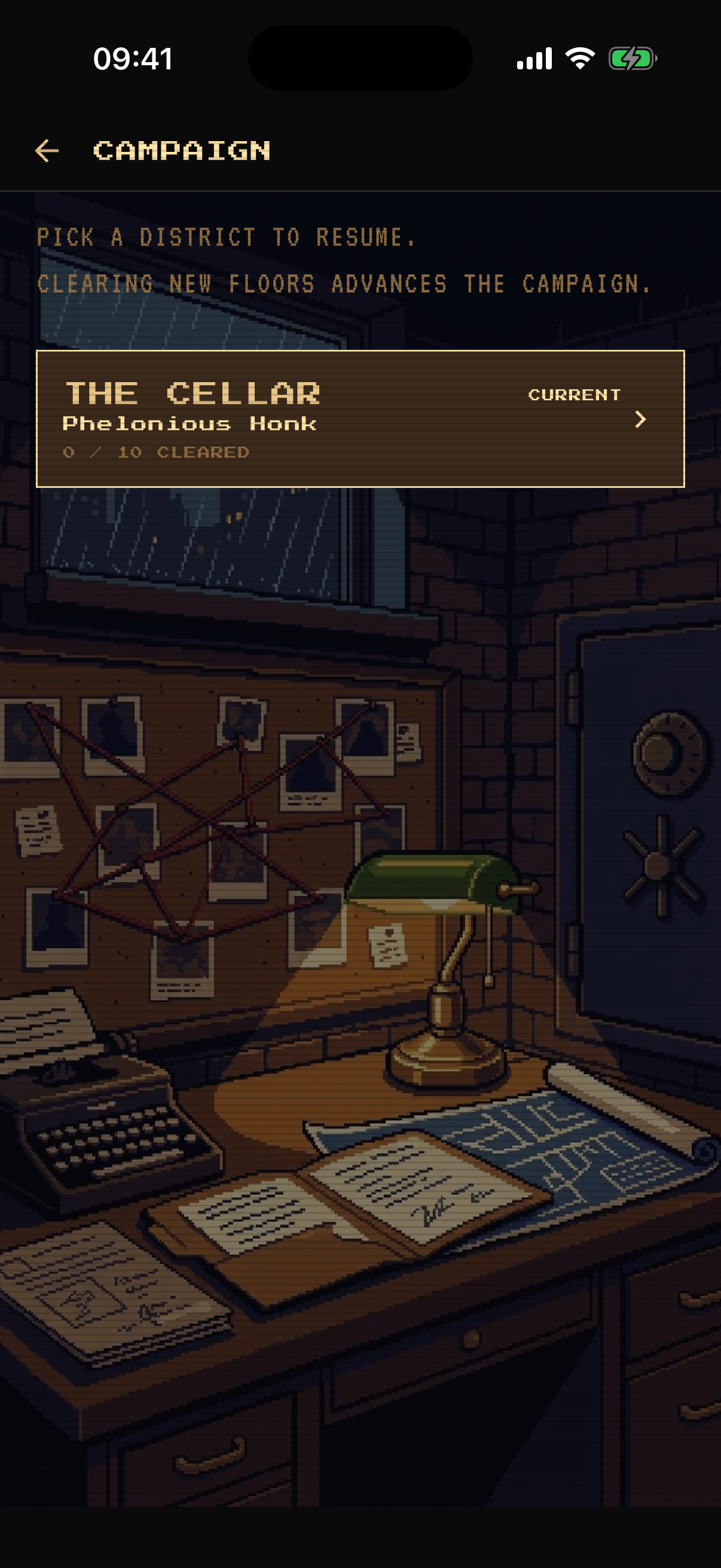
Thirteen districts, each a case file. Each case is a puzzle box: a chord, a melody, a fragment you have to identify by ear. Solve it and you close the file. Miss it and the suspect stays at large.
Districts ramp from triads in the cellar to dense voicings on the top floor. Skill focus shifts as you go: diatonic shapes, bass intervals, cluster discrimination, chromatic resolution. Not what's easy to grade. What's hard to hear.
A submission is correct or it isn't, but a wrong submission reveals what you got wrong. Comparison playback against your answer, not a buzzer.
When tokens represent pitches, they look identical. Pitch information lives in the audio. The load-bearing rule that makes Earshot a real ear trainer instead of a colour-matching game.
Each district mixes Pitch Sort, Tone Lock, and Frequency Stack with a per-district weighting. The mode you encounter at floor 4 is not always the same one you saw at floor 3.
The game teaches itself by being honest about what you got wrong. No daily login bribe, you play when you want to play.
Track per-district results and personal bests. Replay any closed case from the practice screen. The fragments you collect across the campaign live in a sound library you can revisit.
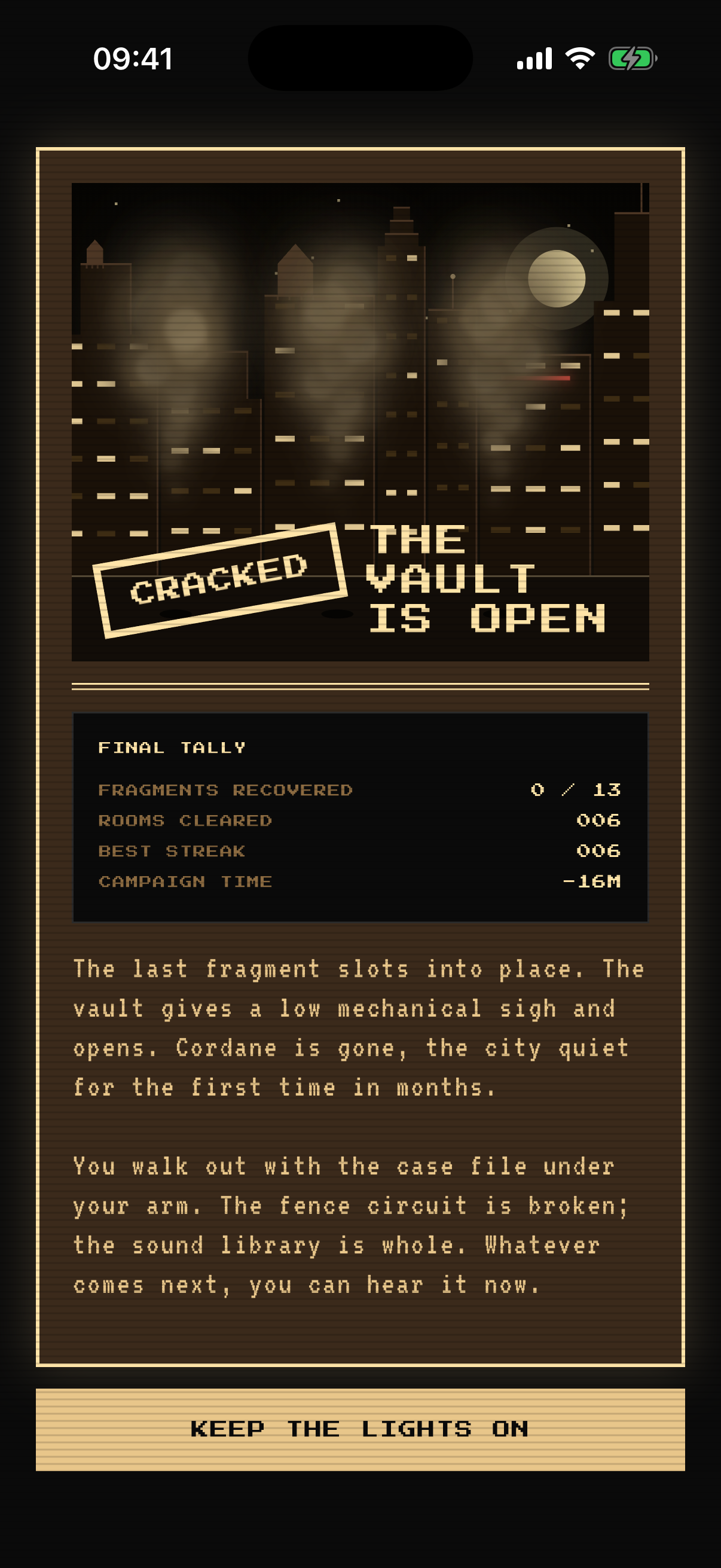
Thirteen districts, then a finale. After the vault opens, the campaign loops with progress preserved, so you can keep your ear sharp without starting over.
Sepia palette, four-tone ramp, deliberately low-resolution sprites. The whole game runs on a single visual identity, from the case file animation to the city skyline that opens the vault when the last district closes.
Single-player. Offline. Best with headphones. Optional, but you will hear the difference.